.png)


The Invisible Workforce: Inside Asia’s Education Gatekeepers
- SH MCC

- Apr 2
- 3 min read
In the global narrative of international education, attention is often directed toward institutions, rankings, and destinations. Universities position themselves as gateways to opportunity. Governments promote policy shifts as signals of openness. Students are framed as decision-makers navigating a marketplace of options.
But beneath this visible architecture lies a system that is rarely examined with the same level of scrutiny or recognition.
An infrastructure that does not sit within universities, yet operates at their frontline. An industry that does not grant degrees, yet determines who receives them.
Across Asia, this system is built and sustained by education consultancy companies, entities often reduced to the term “agents,” but whose function extends far more than representation.
They are, in effect, the invisible workforce of international education.
Where Decisions Actually Begin
For many students, the journey abroad does not begin with a university website or an admissions portal. It begins in a counselling room.
A space that is often modest. Sometimes transactional. Occasionally overwhelmed. But always consequential.
Here, decisions are not made in isolation, but are shaped, through interpretation, filtration, and translation. Academic pathways are explained, but so are visa conditions, employability outcomes, and migration implications. Parents ask questions that institutions do not always address. Students confront uncertainties they are not equipped to navigate alone.
What appears to be guidance is, in practice, the first layer of system mediation.
Education consultants do not merely present options, but structure understanding.
From Advisory to Execution
The perception of consultancy as advisory underestimates its operational depth.
Beyond the initial conversation lies a sequence of actions that are procedural, time-sensitive, and often unforgiving. Documentation must align with institutional requirements. Visa applications must satisfy regulatory frameworks that vary across jurisdictions. Offer letters, English proficiency, financial proof, and compliance checkpoints must converge within narrow timelines.
In many cases, consultancy companies act as decentralized operational units for international institutions, handling application pipelines, ensuring documentation integrity, and maintaining process continuity across borders.
Market Access and Expansion
International education is frequently described as global. In reality, it is locally activated.
Universities do not simply “enter” markets. They are introduced, contextualized, and positioned within them. Cultural nuances, parental expectations, economic realities, and local perceptions all influence how institutions are received.
Education consultancies operate within this layer.
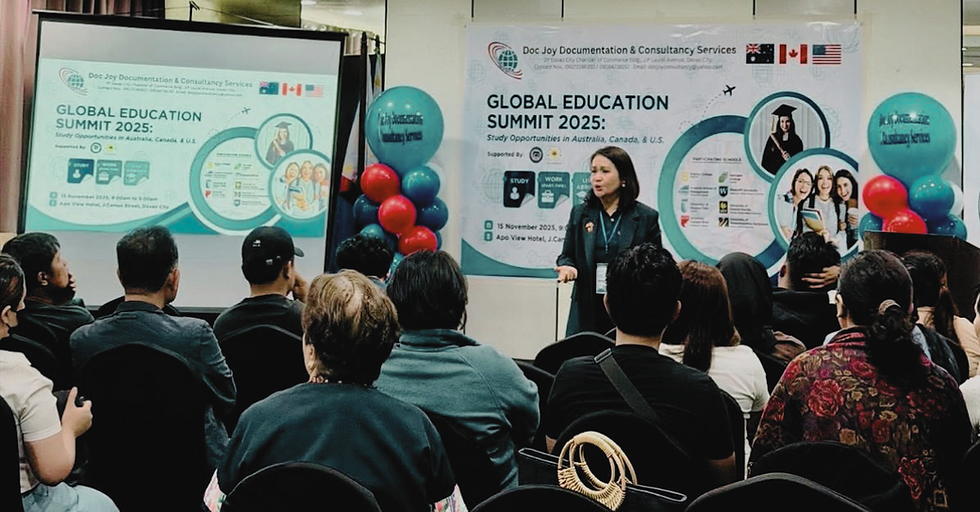
They build awareness where none exists. They convert interest into applications. They sustain presence through events, roadshows, and ongoing engagement. In emerging and high-growth markets across Southeast Asia and South Asia, they are often the primary interface between institutions and prospective students.
Without this infrastructure, expansion is feasible but considerably limited.
The Question of Influence
With proximity to decision-making comes influence.
This is where the industry becomes more complex.
Students trust consultants not only for information, but for direction. In many cases, they rely on them entirely. This creates a dynamic where recommendations carry weight beyond advisory intent.
Institutional partnerships, commission structures, and performance incentives coexist alongside genuine attempts to guide students toward suitable outcomes.
Between commercial alignment and student interest. Between access and objectivity. Between scale and responsibility.
The industry is not unaware of this tension. Ethical frameworks, accreditation standards, and regulatory discussions continue to evolve. But the reality remains, influence is embedded within the system, not external to it.
More Than Placement
When a student boards a flight, the visibility of this system fades.
The narrative shifts, to campus life, academic performance, cultural adjustment. The consultant disappears from the story. But the decision remains.
The course selected, the country chosen, the pathway pursued, these are not isolated outcomes. They are the result of layered interactions, interpretations, and processes that took place long before departure.
Reframing the Industry
To understand international education purely through institutions and students is to overlook a critical layer of its function.
Education consultancies are not peripheral actors, but are embedded within the system’s core mechanics.
They interpret complexity. They operationalize mobility. They enable scale.
Yet, they remain largely unexamined, positioned somewhere between service providers and strategic partners, without fully being acknowledged as either.
A System That Relies on What It Does Not See
The growth of international education has been built on visibility, rankings, campaigns, global positioning. But its continuity depends on something less visible.
People working across offices, cities, and countries. Conversations that shape decisions before they are formalized. Processes that ensure movement across borders is not only possible, but manageable.
The system is visible. The workforce behind it is not.
And yet, it is this invisible workforce that continues to move it forward.





.jpeg)

Comments